July 9, 2018 -ABSTRACT
Outpatient-based sharp debridement is considered an important element for the care of a chronic ulcer.
Objective: The aim of this study is to evaluate the change in bacterial amounts with sharp debridement in a clinical setting.
Materials and Methods: Bacterial autofluorescence, quantitative cultures, semiquantitative cultures, and qualitative
… Read More
June 1, 2018 -ABSTRACT Background:
Clinical diagnosis of infection in chronic wounds involves assessment of signs and symptoms based on visual inspection and microbiological cultures. This process is subjective and delayed culture results often prevent prompt treatment. Fluorescence imaging has recently been introduced as a new method to visualize the presence of
… Read More
May 1, 2018 -ABSTRACT Aim:
To compare the efficacy of standard clinical signs and symptoms (CSS) guided-Levine swabbing with autofluorescence (AF) imaging-guided swabbing to detect bacteria in diabetic foot ulcers.
Procedure/Method: Twenty-nine participants with diabetic foot ulcers were recruited between December 2014 and February 2015. Diabetic foot ulcers (n=31) were evaluated for CSS
… Read More
April 30, 2018 -An infection is a serious complication of a foot ulcer and requires immediate treatment. Since not all infections are treated the same way, accurate sampling is critical to identify the causative pathogens, and ensure appropriate treatment selection. Read More
March 19, 2015 -ABSTRACT Background:
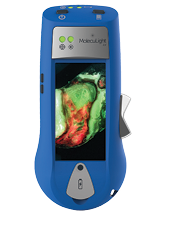
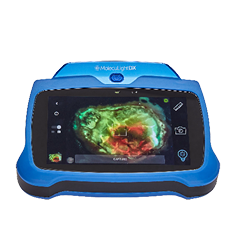
Traditionally, chronic wound infection is diagnosed by visual inspection under white light and microbiological sampling, which are subjective and suboptimal, respectively, thereby delaying diagnosis and treatment. To address this, we developed a novel handheld, fluorescence imaging device (PRODIGI) that enables non-contact, real-time, high-resolution visualization and differentiation of key
… Read More